alt="logo Lamacoppa Leaf Sciences"

Table of Contents

WHAT IS CBD?

CBD (cannabidiol) is one of the most studied and well-known phytocannabinoids found in the hemp plant (Cannabis sativa L.), a plant belonging to the Cannabaceae family.

Unlike THC, CBD is not psychoactive: it does not cause a “high,” does not alter perception, and does not produce the euphoria typically associated with recreational cannabis. Precisely because of this characteristic, CBD has become central in the wellness and research world, paving the way for a wide range of products: CBD oil, cosmetics, herbal teas, capsules, extracts, crystals, and much more.

Hemp is a true “natural factory” of molecules: it contains over 100 cannabinoids, as well as terpenes, flavonoids, fatty acids, waxes, and aromatic compounds. This is why two oils may look similar on the label but differ greatly in aroma profile, spectrum of substances, and perceived quality.

alt="what is CBD"

CBD: why is it so popular today?

CBD has become global for three very concrete reasons:

  1. Non-psychoactive: it is the “wellness-friendly” cannabinoid, chosen by those who want natural support without resorting to products containing chemical molecules with significant contraindications.
  2. Versatility: there are different formats and concentrations to suit different habits and needs (drops, sprays, cosmetics, isolates).
  3. Growing scientific interest: from the 1960s onward, research on cannabinoids has accelerated, thanks also to discoveries related to the endocannabinoid system and improvements in analytical techniques.

What is the history of CBD?

From the first scientific studies to modern research, the history of CBD is a journey of research and discoveries that have changed the way we look at hemp. It all began in 1940, when American chemist Roger Adams published some of the first fundamental works on the study of cannabidiol. This was one of the key steps that transformed cannabis from a “traditional plant” into an object of modern chemical research.

During his research, Adams also isolated another cannabis compound, cannabinol (CBN), and hypothesized the existence of a third compound, which would later be identified as tetrahydrocannabinol (THC), the main compound responsible for the psychoactive effects of cannabis.

The decisive breakthrough came between 1963 and 1964, when the group led by Israeli researcher Raphael Mechoulam clarified the structure of CBD (cannabidiol) and isolated Δ9-THC (tetrahydrocannabinol) in pure form, opening the door to cannabinoid pharmacology and a more rigorous understanding of the effects of the plant’s different molecules. From that moment on, scientific interest never stopped: research shifted from analyzing compounds to the most important question—how these substances interact with the human body.

The answer began to take shape in 1992 with the identification of anandamide, one of the first endocannabinoids described. This discovery strengthened and placed at the center the concept of the endocannabinoid system (ECS): an internal regulatory network that helps maintain balance in functions such as mood, sleep, appetite, stress response, and pain perception. This is where CBD began to be observed not merely as a molecule, but as a compound capable of interacting with a real and measurable biological system.

Finally, in 2018, the World Health Organization (WHO) highlighted that CBD, in general, does not show potential for abuse or dependence, while emphasizing the importance of informed use and product quality. This represents the endpoint of modern research: not only understanding “what” CBD is, but also how to choose it, how to use it responsibly, and why transparency (laboratory analyses, origin, production process) is now an integral part of the value of a cannabidiol-based product.

alt="CBD Products"

All the Forms of CBD You Find on the Market

When you read “CBD” on a product label, you’re only seeing the beginning of the story.

What truly defines the experience is the type of hemp extract used, the spectrum of compounds it contains, and—just as important—the format in which CBD (or hemp actives) are delivered. Oils, topicals, and herbal hemp infusions are not interchangeable: they’re designed for different goals, preferences, and routines.

CBD isolate oil is the most minimalist option: it contains almost pure CBD, with little to no presence of other cannabinoids or terpenes.

It’s typically chosen by people who want a clean, straightforward formula, a neutral flavor profile, and maximum simplicity in composition.

On the other end, full spectrum CBD oil Full spectrum preserves a much broader profile of naturally occurring hemp compounds—cannabinoids, terpenes, and flavonoids—and may include trace amounts of THC within legal limits and according to the producer’s lab analyses.

Many users prefer it for its more “botanical” character and richer aromatic complexity.

In between these two, CBD oil broad spectrum offers a more complete hemp profile than isolate while removing (or reducing to non-detectable levels) THC depending on the process and testing—making it a popular middle ground.

Beyond oils, one of the fastest-growing categories is topical CBD, especially CBD skincare creams and muscle & joint relief creams/balms.

In topical products the goal is local support: the formula is designed to work where it’s applied, helping the skin feel comfortable and balanced.

CBD is a lipophilic (oil-loving) compound, which means it can be formulated to support skin absorption—particularly when paired with high-quality carriers and well-designed cosmetic ingredients.

This is why CBD topicals are often used on targeted areas such as shoulders, neck, lower back, legs, knees, or hands, when people want a focused, localized sensation of comfort.

And there’s another increasingly popular format: hemp herbal teas (Pure hemp infusions).

Unlike oils or creams, hemp teas are typically built around the plant’s traditional herbal profile and ritual—warmth, aroma, and relaxation—often combined with botanicals such as chamomile, lemon balm, or lavender.

Depending on the recipe and the plant parts used, hemp infusions may not deliver the same CBD concentration as oils, but they can be a gentle, enjoyable way to integrate hemp into a daily wellness routine, especially in the evening.

Practical note: if you are subject to drug testing for work or sports, choosing a full spectrum product may increase the risk of THC positivity (even with legal products), because tests look for THC metabolites, not CBD. If you need a “THC-free” approach, isolate or properly tested broad spectrum products are generally preferred.

Difference Between CBD and THC

CBD and THC are both cannabinoids, but they behave very differently.

  • THC is primarily responsible for psychoactive effects because it strongly interacts with receptors and brain circuits related to reward (dopamine).
  • CBD does not produce euphoria and, in general, does not show abuse or dependence potential according to WHO evaluations.

In simple terms: THC = alteration, CBD = no alteration (always with responsible use and verified quality, such as Lamacoppa Leaf Sciences CBD oils).

alt="CBD Oil"

What Does CBD Taste Like?

CBD Oil: Why Do Some Taste “Herbal”?

The taste depends on several factors:

  • spectrum (CBD isolate vs full/broad spectrum)
  • presence of terpenes (myrcene, limonene, pinene, etc.)
  • carrier oil (MCT, olive oil, hemp oil, etc.)
  • refining process (how “filtered” the extract is)

A high-quality CBD oil full spectrum tends to have a natural herbal/aromatic aftertaste.

A high-quality CBD Oil Broad Spectrum has a smoother taste on the palate compared to a full spectrum oil.

A CBD oil Isolate made with CBD crystals, being almost pure, is practically tasteless and results in a very neutral oil depending on the carrier oil used.

CBD Production Process in short

Talking about “good” CBD without talking about the supply chain is like talking about wine without talking about grapes. True quality comes from a precise chain.

Hemp Cultivation

In Italy, the cultivation of varieties listed in the EU common catalogue is regulated by laws governing industrial hemp. The law establishes thresholds and protections for farmers regarding THC content in cultivation (with a tolerance range up to 0.5% THC).

Indoor / Outdoor / Greenhouse

  • Outdoor: more “natural,” often high plant yields, but greater variability (climate, pests)
  • Indoor: efficient yields with total control, but higher costs
  • Greenhouse: a compromise between control and scalability

CBD Extraction: Main Methods

Supercritical CO₂ CBD Extraction

One of the most appreciated industrial methods because it allows clean extraction without solvent residues when properly managed.

Ethanol CBD Extraction

Widely used for efficiency and cost, but requires rigorous purification to manage residues and unwanted co-extracts.

Refining: Decarboxylation, Winterization, Distillation – Why They Matter

Many serious producers include additional steps to:

  • improve purity
  • stabilize the product
  • reduce waxes and “heavy” components
  • obtain a more consistent cannabinoid profile

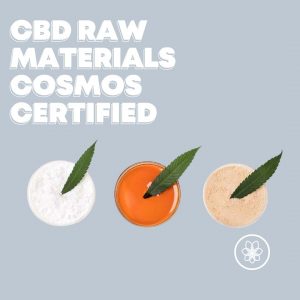
At the industrial level, the most commonly used extraction method is supercritical CO₂, as it preserves CBD purity without leaving processing residues.

alt="CBD Cosmos Certified"

Laboratory Testing

If cultivation and extraction are performed carefully, the final product can be of excellent quality. But the only way to be truly certain is through laboratory testing.

For this reason, analyses should be carried out by independent third-party laboratories, ensuring impartiality and maximum reliability.

The resulting data should be made available through a Certificate of Analysis (COA), which consumers can consult to clearly understand what they are purchasing: actual cannabinoid concentration, THC levels, compliance with legal limits, and safety standards.

This transparency is what distinguishes a serious product from a generic one and enables informed choice.

alt="CBD properties"

CBD Properties: What Science Says

CBD is studied in many fields, but it is essential to use correct language: being studied does not mean being a cure.

Most Studied Areas

  • modulation of stress and anxiety response
  • sleep support
  • pain and inflammation reduction
  • antiemetic effects against nausea (in specific contexts)
  • neurology (mainly in pharmaceutical settings)

The WHO has assessed CBD as generally well tolerated and without evidence of abuse or dependence, but this does not eliminate the need for attention to dosage, quality, and interactions.

Humans have used hemp as a natural remedy for millennia precisely because of its properties: analgesic, anxiolytic, antidepressant, antipsychotic, anticonvulsant, antiemetic, calming, energizing, neuroprotective, and antioxidant.

Several scientific studies confirm the broad effectiveness of CBD for:

  • Stress and anxiety
  • Sleep disorders
  • Pain
  • Inflammation
  • Arthritis
  • Fibromyalgia
  • Rheumatism
  • Premenstrual syndrome (female cycle-related disorders)


alt="Proprietà CBD e sistema endocannabinoide"

How Does CBD Work in the Body?

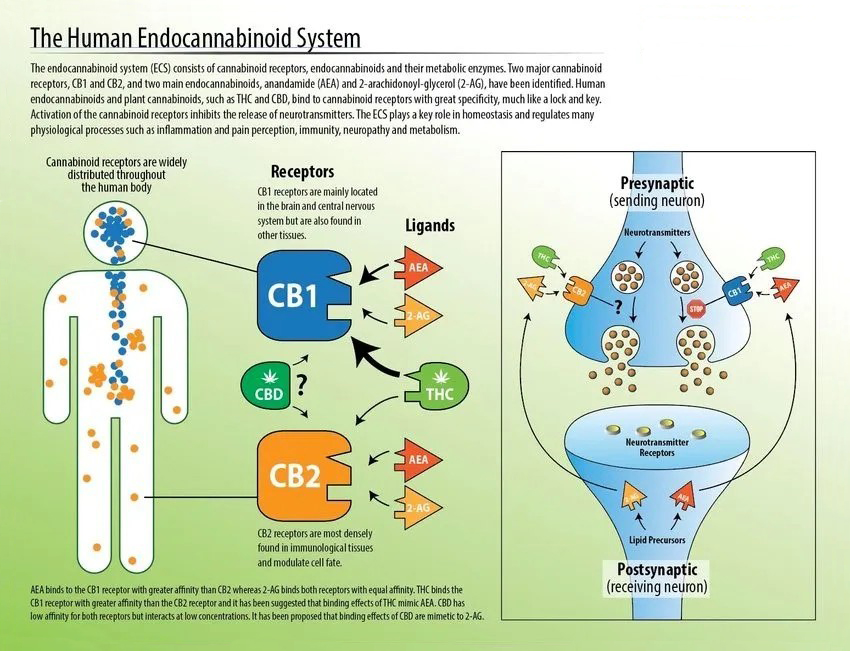
CBD interacts with the body’s endocannabinoid system (ECS), a regulatory system that plays a crucial role in maintaining homeostasis (internal balance) across various physiological processes, including pain, mood, appetite, sleep, and immune response.

Key Components of the Endocannabinoid System

Receptors: CB1 and CB2 receptors are the main ECS receptors.
CB1 receptors: mainly located in the central nervous system; influence motor coordination, pain, appetite, memory, and mood.
CB2 receptors: primarily found in the immune system; influence inflammation and pain.

Endocannabinoids: naturally produced compounds that activate cannabinoid receptors. The main ones are anandamide and 2-AG.

Enzymes: enzymes such as FAAH and MAGL break down endocannabinoids after they have fulfilled their function.

How Does Cannabidiol Act?

Interaction with receptors: CBD does not bind directly to CB1 and CB2 receptors but modulates their activity, increasing or reducing the effects of endocannabinoids or other compounds.

Enzyme inhibition: CBD can inhibit enzymes that degrade endocannabinoids, prolonging their effects in the body.

Serotonergic receptors: CBD also interacts with serotonin receptors (5-HT1A), contributing to its anxiolytic and antidepressant effects.

Vanilloid receptors: CBD can activate TRPV1 receptors, involved in pain and body temperature regulation.

What Does CBD Do to Our Body?

CBD helps the body when it is under stress and acts as a natural rebalancer. It is a natural ally in cases of insomnia, anxiety, stress, menstrual pain, migraine, and chronic pain.

CBD effects on the body: its action consists of interaction with our endocannabinoid system.

CBD Benefits

A 2021 survey on individuals suffering from cervical pain or other spinal disorders highlights how CBD, through its muscle-relaxant properties, may help make pain more tolerable. Unlike conventional drugs, CBD does not show evident risk factors or side effects; on the contrary, its benefits are clearly observed.

CBD benefits extend beyond simple pain relief. It has shown promise in reducing stress, dizziness, and nausea associated with neck pain. Furthermore, CBD health benefits also include relief from anxiety and depression, headaches, chronic pain management, seizure reduction, cervical hernia, and treatment of skin conditions such as acne, psoriasis, and eczema.

CBD Side Effects and Drug Interactions

CBD is often well tolerated, but it is not “just water.” Possible effects (varying by individual and dose) include:

  • drowsiness or sedation
  • gastrointestinal disturbances (e.g., diarrhea)
  • dry mouth
  • appetite changes
  • fatigue

However, serious side effects are quite rare, and CBD is likely safe for most people, especially compared to many pharmaceuticals that carry significant contraindications.

CBD may potentially interact with certain medications, and these interactions can vary. Main drug groups include:

  1. Anticoagulants: CBD may increase bleeding risk when taken with drugs such as warfarin due to inhibition of liver metabolism.
  2. Anticonvulsants: CBD may alter plasma concentrations of other antiepileptic drugs, such as clobazam, enhancing both desired and undesired effects.
  3. Antidepressants: concomitant use with SSRIs such as sertraline or fluoxetine may alter effectiveness or elimination dynamics, increasing side-effect risk.
  4. Cardiac and antihypertensive drugs: CBD may have hypotensive or hypertensive effects depending on dose and context, influencing treatment efficacy.
  5. Sedatives and benzodiazepines: combined use may enhance sedative effects and increase excessive drowsiness risk.
  6. Pregnancy and breastfeeding: CBD use is not recommended.

alt="CBD Dosage"

CBD Dosage and How to Take CBD Oil

CBD dosage must be individualized and may change over time. Factors influencing interaction include:

  • body weight
  • metabolism
  • lifestyle
  • health condition

These factors vary widely by person and depend on sex and genetics. Everyone must therefore find their own optimal dosage.

CBD drops can be taken in various ways, but the sublingual method (drops under the tongue) is the most common and fastest:

  1. Shake the bottle well.
  2. Use the dropper to place the desired number of drops under the tongue.
  3. Hold for 60 seconds to allow absorption through sublingual capillaries before swallowing.

Most studies investigating CBD effects recommend starting with a low-to-moderate dose and gradually increasing until desired effects are achieved.

Weekly tracking of dosage, timing, and symptoms is recommended to determine optimal intake.

How Long Does CBD Stay in Urine? (And the Drug Test Issue)

Here it is essential not to confuse things:

  • Standard tests look for THC metabolites, not CBD.
  • The risk of positivity mainly arises from:
    • full spectrum products with THC traces
    • contamination or inaccurate labeling
    • continuous use leading to THC accumulation in small but detectable amounts

Studies and reports show that some retail CBD products may pose a positivity risk due to THC content not always clearly declared.

If you need zero THC risk, choose:

  • CBD oil with CBD isolate crystals, or
  • Broad spectrum CBD oil, which does not contain THC.

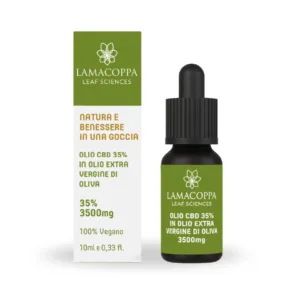
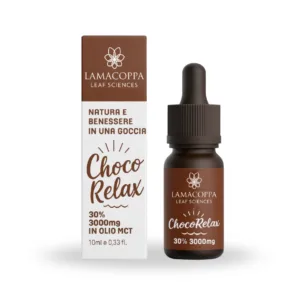
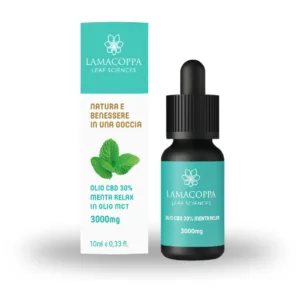
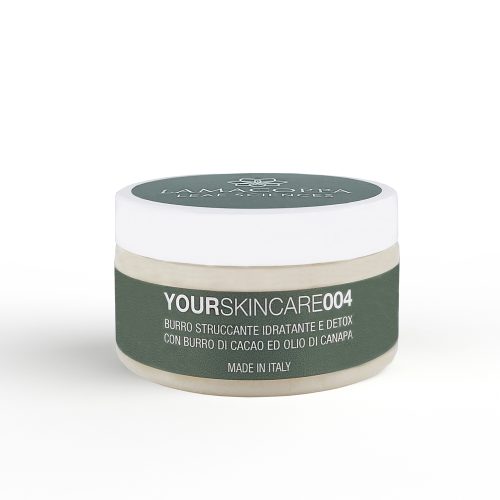
DISCOVER OUR CBD PRODUCTS

2
  • Item added to cart
Your Cart